
Meat Meal in Pet Food: What It Really Is, Why It’s Used and Why Quality Matters


The words “meat meal” can make some pet owners immediately suspicious.
Rendered.
Processed.
Meal.
To many people, those words sound like a shortcut.
Something cheap.
Something inferior to “real meat”.
But that reaction is often based more on how the ingredient sounds than on what it actually is.
At Pet Food Australia, we use rendered animal protein ingredients ourselves.
So we are not going to pretend that rendering becomes bad simply because the word makes some people uncomfortable.
The better question is:
What is the ingredient?
Where did it come from?
How was it processed?
What is its nutritional specification?
And what does it contribute to the finished food?
Because not every meat meal is the same.
And “meal” is a processing description — not a quality grade.

What is meat meal?
In simple terms, meat meal is an animal protein ingredient that has been cooked, had most of its water and much of its fat removed, and then ground into a concentrated meal.
AAFCO describes rendered products as ingredients that have been cooked, with heat and pressure removing most of the water and fat and leaving primarily protein and minerals.
The term “meal” refers to the fact that the material is then ground into relatively uniform particles. (AAFCO)
That is very different from the idea that somebody simply takes unidentified scraps, grinds them together and tips them into a bag of dog food.
Rendering is a controlled processing method.
The end ingredient can be a concentrated source of protein, amino acids, fats and minerals.
Why remove the water?
Fresh meat contains a lot of water.
That is not a criticism of fresh meat. Water is naturally part of it.
But it does matter when people compare ingredient lists.
A fresh meat ingredient may appear high on an ingredient list partly because of the water it contains before processing.
A meat meal has already had most of that moisture removed.
That means it can be considerably more concentrated.
PFIAA specifically notes that meat meals and other dried ingredients are concentrated through removal of water, and sometimes fat, which is why Australian labelling rules allow certain rehydration calculations when describing their original contribution. (PFIAA)
So seeing the word “meal” does not mean the manufacturer has watered something down.
It is essentially the opposite.
Much of the water has been removed.
Rendering isn’t automatically bad
This is one of the biggest misconceptions.
Some consumers hear “rendered” and assume the ingredient must therefore be poor quality.
But rendering itself is simply a process.
Heat treatment is used to reduce microbial risk and turn animal tissues into stable ingredients that can be stored, transported and incorporated into food.
AAFCO describes rendering as a process that cooks animal-derived ingredients to help prevent microbial contamination. (AAFCO)
Whether the resulting ingredient is excellent, mediocre or unsuitable for a particular recipe depends on much more than the fact that it was rendered.
That includes:
- the raw material used
- the amount of bone
- protein content
- amino-acid profile
- fat content
- ash and mineral content
- digestibility
- consistency between batches
- processing temperature and time
That is why two ingredients with broadly similar names can perform very differently nutritionally.
Not all meat meals are equal
This is where the conversation becomes much more useful.
Saying:
“This food contains meal, therefore it is bad”
is far too simplistic.
Research into poultry by-product meals has found significant variation between products in ash, fat, collagen and other nutritional measures, and has shown that processing conditions can affect final ingredient quality. (ScienceDirect)
Another study comparing feed-grade and pet-food-grade poultry by-product meal found the pet-food-grade ingredients had:
- higher protein
- lower ash
- lower calcium
- higher lysine and methionine
- better amino-acid digestibility
than the feed-grade samples studied. (ScienceDirect)
That is the point.
The word “meal” alone tells you very little about quality.
The specification matters.
What does ash have to do with it?
“Ash” is another word that can sound alarming until you understand what it means.
Ash is essentially the inorganic mineral content left after a food or ingredient is completely burned under laboratory conditions.
It includes minerals such as:
- calcium
- phosphorus
- magnesium
- potassium
- sodium
- trace minerals
Ash is not literally somebody adding fireplace ash to pet food.
But a very high ash level in an animal meal can sometimes indicate a larger proportion of bone or mineral material relative to protein.
That can affect how useful that ingredient is for a particular formulation.
Nutritionists therefore care about ash.
They also care about:
- calcium
- phosphorus
- calcium-to-phosphorus ratio
- crude protein
- amino-acid availability
- fat
- digestibility
A nutritionist may accept one meal specification and reject another because it does not fit the nutritional target of the recipe.
That doesn’t make one ingredient universally “good” and the other universally “bad”.
It means ingredients are selected against the requirements of the formulation.
Why named meals matter
There is another important distinction consumers should understand.
Compare:
kangaroo meal
with:
animal meal
or a generic animal-derived ingredient.
A named meal gives you more information about the animal source.
That can matter enormously.
If somebody is trying to avoid a particular protein because their dog does not tolerate it well, knowing the species is useful.
A generic animal meal may provide less certainty about source.
AAFCO’s definitions specifically distinguish species-named ingredients from broader rendered categories. A meat meal can be named by species when appropriate, such as beef meal. (AAFCO)
This is one of the reasons we prefer transparency around protein sources.
Not because a generically named ingredient is automatically nutritionally poor.
But because knowing the species can matter when selecting food for an individual animal.
What are by-products and co-products?
This is another area filled with emotional language.
The term “by-product” sounds like something nobody wanted.
But biologically, many animal by-products are highly nutritious.
They can include tissues such as:
- liver
- kidney
- spleen
- stomach
- intestines
- blood
- certain fats
- bone
AAFCO notes that these tissues can supply important nutrients even though some are not commonly eaten by people in countries such as the United States. (AAFCO)
PFIAA increasingly uses the term co-products and describes them as animal parts that are not the main muscle meat but remain nutritionally useful, including organs, fat, feet, viscera and bone. (PFIAA)
This is where human culture can distort how we judge pet food.
Australians don’t eat the whole animal
Walk through most Australian supermarkets and you will see:
steaks.
mince.
chicken breast.
lamb chops.
pork.
What you see far less often is:
tripe.
kidneys.
spleen.
lungs.
heart.
other organ tissues.
That doesn’t mean those tissues suddenly have no nutritional value.
It means Australian eating habits favour particular cuts.
In many cultures, offal is completely normal food.
Tripe is a good example.
Mention tripe to some Australians and you can almost see the reaction before they say anything.
Yet tripe soups and stews are traditional dishes across Europe, Asia, Latin America and many other regions.
The animal tissue didn’t change.
The culture did.
That is an important distinction.
Our reaction to an ingredient isn’t the same thing as its nutritional value
People often judge pet-food ingredients using a human dining-table standard.
Would I order it at a restaurant?
Would I serve it at a barbecue?
Would I eat it myself?
But a dog or cat does not require every ingredient in its food to resemble something displayed in a butcher’s premium cabinet.
The nutritional value of an ingredient is determined by what nutrients it provides and how the animal can use them.
Liver, for example, is rich in several vitamins and minerals.
Kidney contains important nutrients.
Bone can contribute calcium and phosphorus.
Organs may contain amino acids and micronutrients that skeletal muscle alone does not provide in the same proportions.
So describing all non-muscle animal material as “waste” misses the nutritional reality.
Rendering also reduces waste
There is an environmental argument here too.
When animals are processed for the human food chain, not every part becomes a steak, roast or breast fillet.
Large quantities of nutritionally useful animal material remain.
Those materials need to go somewhere.
Rendering and animal co-product processing allow some of those materials to be converted into usable ingredients rather than simply discarded.
PFIAA specifically notes that pet food uses by-products of the human food chain and that doing so can contribute to the sustainability of food systems without reducing human food availability. (PFIAA)
That is a far more complete way of looking at the process.
Instead of asking:
“Why is pet food using these parts?”
we could also ask:
“Why would we discard nutritionally useful animal material simply because humans in our culture don’t commonly eat it?”
Rendering is used beyond pet food
Animal-derived materials and co-products are used throughout broader food and manufacturing systems.
Rendered fats, collagen-derived materials and other animal co-products can have applications across:
- human food
- animal feed
- pharmaceuticals
- cosmetics
- personal-care products
- industrial manufacturing
The exact processing and specifications differ depending on the final use.
So it would be inaccurate to say that the same pet-food meat meal is literally being rubbed onto somebody’s face as a cosmetic ingredient.
It isn’t.
But the broader point remains valid:
Animal-derived co-products are used far beyond pet food.
Consumers often accept products derived from animal materials in other parts of their lives without thinking about how those ingredients were processed.
Yet the word “rendered” on a pet-food discussion can suddenly become frightening.
The process deserves to be understood rather than judged by the word alone.
What exactly can go into meat meal?
This depends on the type of meal.
AAFCO defines meat meal as a rendered product from mammalian tissues, with exclusions around materials such as added hair, hoof, horn, hide trimmings, manure and stomach or rumen contents except unavoidable amounts arising from good processing practices. (AAFCO)
Other meal categories have different definitions.
For example:
- meat meal
- meat and bone meal
- poultry by-product meal
- animal by-product meal
are not interchangeable terms.
This is another reason ingredient terminology matters.
A knowledgeable formulator does not simply see “animal stuff”.
They see ingredients with different nutritional profiles and different roles.
Why bone content matters
Animal meals can naturally contain mineral material, particularly where bone is included.
Bone itself isn’t inherently bad.
Calcium and phosphorus are essential nutrients.
But the amount and ratio matter.
AAFCO’s definitions for meat meal and meat-and-bone meal include limits and guarantees relating to phosphorus, calcium and indigestible residues. (AAFCO)
A nutritionist therefore has to consider the contribution of the meal to the entire recipe.
If an ingredient brings substantial calcium and phosphorus into the formulation, the rest of the recipe has to account for that.
Again:
the finished nutritional balance matters.
Why nutritionists work to specifications
This is perhaps the part consumers rarely see.
Commercial pet food formulation isn’t usually:
“Let’s add some chicken meal because chicken sounds good.”
Ingredients are generally specified according to measurable nutritional characteristics.
A nutritionist may be considering:
- crude protein
- fat
- moisture
- ash
- calcium
- phosphorus
- amino acids
- digestibility
- energy
- consistency
The ingredient has to work within the nutritional architecture of the recipe.
PFIAA notes that ingredients can be selected both for nutrition and for functional roles within a formulation, and that complete pet foods must meet nutritional adequacy requirements. (PFIAA)
That is why looking at one ingredient in isolation can be misleading.
A high-quality ingredient can still make a poor food
This point cuts both ways.
You can have an excellent meat meal and still formulate a poor overall diet.
Likewise, an ingredient list full of fashionable-sounding whole foods does not automatically guarantee an excellent nutritional outcome.
Pet food is a formulation.
Ingredients interact.
Protein matters.
But so do:
- amino-acid balance
- fat
- essential fatty acids
- vitamins
- minerals
- energy density
- digestibility
- fibre
- calcium and phosphorus
- trace nutrients
That is why the final nutritional profile matters more than whether one ingredient sounds appealing in a Facebook comment.

Fresh meat versus meat meal
This should not be treated as a fight either.
Fresh meat has advantages.
Meat meal has advantages.
They can also be used together.
Fresh meat contributes:
- protein
- fat
- flavour
- moisture
Meat meal can contribute a much more concentrated source of protein because most of the water has already been removed.
A recipe can use both strategically.
The useful question is not:
“Does it contain meal?”
It is:
“What is the final nutritional result?”
Is meat meal highly processed?
It is processed.
That isn’t controversial.
Rendering uses heat and mechanical processing.
But the word processed by itself does not tell you whether a food is healthy, unhealthy, safe or unsafe.
Cooking is processing.
Drying is processing.
Grinding is processing.
Pasteurisation is processing.
Fermentation is processing.
Kibble production is processing.
The relevant questions are:
Why is it processed?
What does processing do to the ingredient?
What nutritional value remains?
Is the finished ingredient safe and appropriate for its intended use?
Simply using the word “processed” as a criticism avoids the real discussion.
What should pet owners actually look for?
Instead of rejecting every food containing meal, ask better questions.
1. Is the protein source identified?
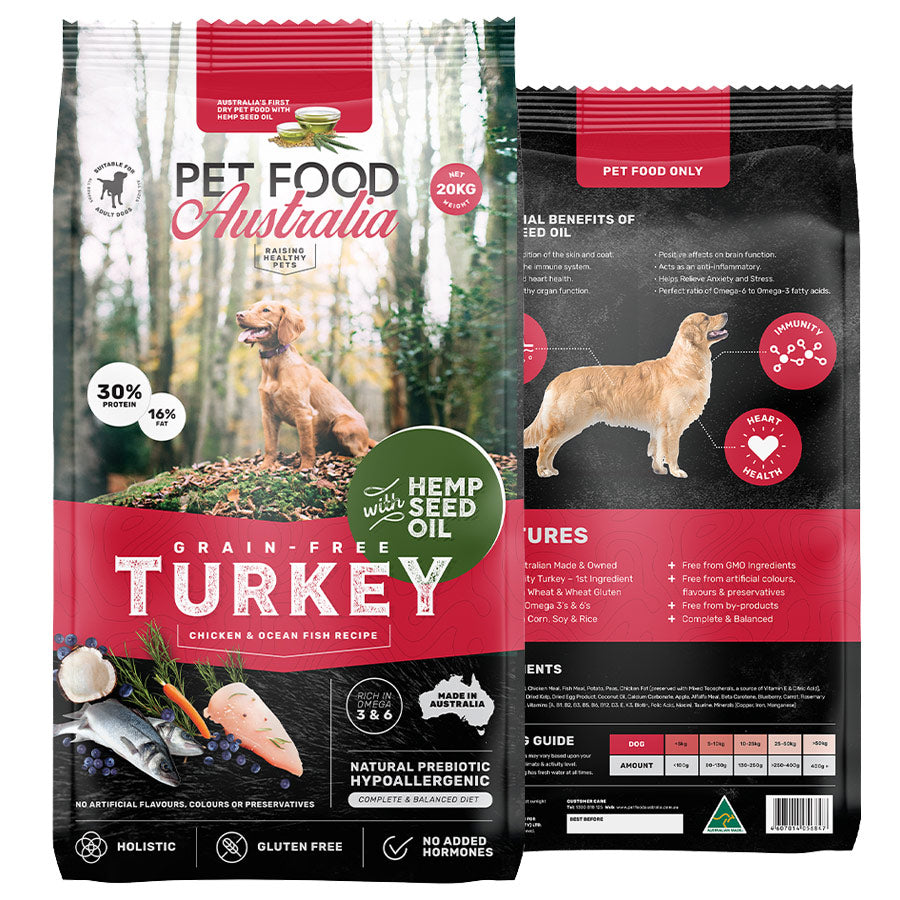
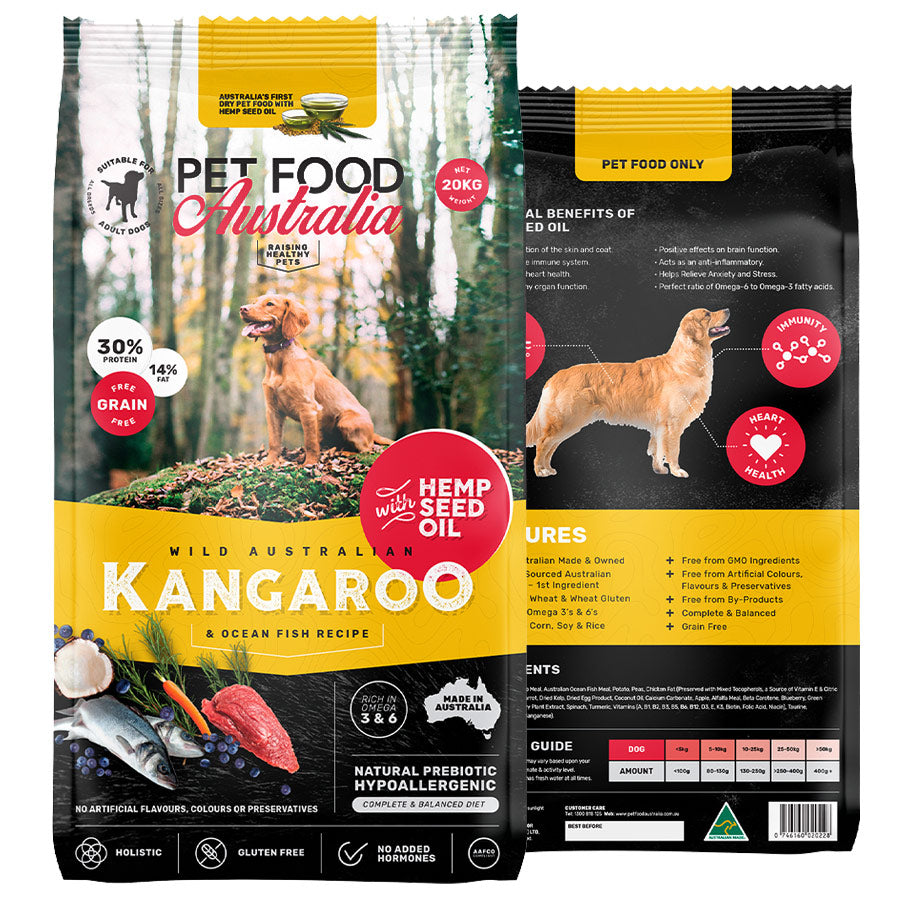
A named protein such as turkey meal or kangaroo meal provides more information than a broad generic description.
2. Is the food complete and balanced?
Australian pet-food labelling standards require information about whether a product is intended to provide complete and balanced nutrition. (PFIAA)
3. What is the overall nutrient profile?
Look beyond one ingredient.
Protein, fat, energy and mineral balance matter.
4. Is the ingredient suitable for your individual animal?
A nutritionally good ingredient may still be inappropriate for a dog that does not tolerate that particular protein.
5. How does your pet actually do on the food?
Observe:
- body condition
- stools
- coat
- skin
- appetite
- muscle
- energy
- digestion
The animal gives you useful information too.
Does Fresh Meat Have to Be Chemically Broken Down to Make Dog Food?
One question rarely discussed in pet food marketing is what happens to fresh meat before it becomes dry kibble.
Fresh meat cannot simply be placed into a bag of dry dog food in its original form. It must undergo processing.
In conventional kibble manufacturing, fresh meat may be minced or mechanically emulsified into a slurry so it can be mixed evenly with other ingredients before cooking and extrusion.
This does not normally require hydrochloric acid.
There is, however, another process known as protein hydrolysis. Hydrolysis breaks proteins into smaller components and can be achieved using enzymes or chemical treatments, including acids.
These are different manufacturing methods and should not be confused.
Similarly, meat meal is not simply fresh meat dissolved into a paste. Properly produced meat meal is made through rendering, which removes moisture and concentrates the remaining nutrients.
For dog owners, the more useful questions are not simply whether an ingredient started as fresh meat or meat meal, but where it came from, how it was processed, how its nutritional quality was verified and how it contributes to the finished formulation.
At Pet Food Australia, we believe ingredient quality, manufacturing standards and the nutritional performance of the complete food matter far more than marketing terminology alone.
Pet Food Australia’s position
We use rendered protein ingredients.
We are comfortable saying that openly.
We would rather educate customers about what those ingredients actually are than participate in marketing that tries to make every competitor ingredient sound frightening.
For us, the important questions are:
What animal is it from?
What is the ingredient specification?
What nutritional value does it provide?
Does it fit the recipe we’re trying to formulate?
And what does the finished food deliver?
Not every meal is the same.
Not every fresh meat ingredient is the same.
Not every pet food using meal is good.
And not every pet food using meal is bad.
That is how nutrition works.
The pet food industry needs a more mature conversation
Pet-food marketing can sometimes become a competition to find the scariest-sounding ingredient on somebody else’s label.
“Rendered.”
“Meal.”
“By-product.”
“Processed.”
Those words are then presented without context.
But owners deserve better than that.
They deserve to understand what the ingredient is, why it exists and how it is actually evaluated.
Because once you understand rendering, the conversation changes.
The question stops being:
“Does this food contain meat meal?”
And becomes:
“What quality of meal is being used, what does it contribute nutritionally, and how good is the finished formulation?”
That is a much better question.
The bottom line
Meat meal is not automatically good.
It is not automatically bad.
It is a concentrated animal-derived ingredient produced through rendering.
Its quality can vary considerably depending on its raw materials, processing, protein content, mineral profile, digestibility and consistency.
Named meals can provide more transparency around species.
Ash and mineral levels matter.
Digestibility matters.
Amino-acid quality matters.
The nutritionist’s job is to select ingredients that collectively deliver the intended nutritional outcome.
And ultimately, that is what pet owners should judge.
Not one word on the ingredient panel.
Not a marketing trend.
Not whether the ingredient sounds appetising to a human.
Understand the ingredient. Understand the formulation. Then look at the animal eating it.
Because in pet nutrition, the end result matters far more than whether one ingredient name sounds good or bad.