
Best Grain-Free Dog Food in Australia: What Actually Makes One Better Than Another


Searching for the best grain-free dog food in Australia can become surprisingly confusing.
One bag says “premium.”
Another says “natural.”
Another focuses on a single ingredient.
And grain-free itself is often presented as though removing grains automatically makes a food better.
It does not.
A strong grain-free dog food should still be judged on the quality and balance of the entire formulation.
For us, that means looking at things such as protein, fat, fibre, essential fatty acids, ingredient quality, digestibility, nutrient balance and whether the recipe actually suits the individual dog.
So What Is the Best Grain-Free Dog Food in Australia?
There is no single food that will be perfect for every dog.
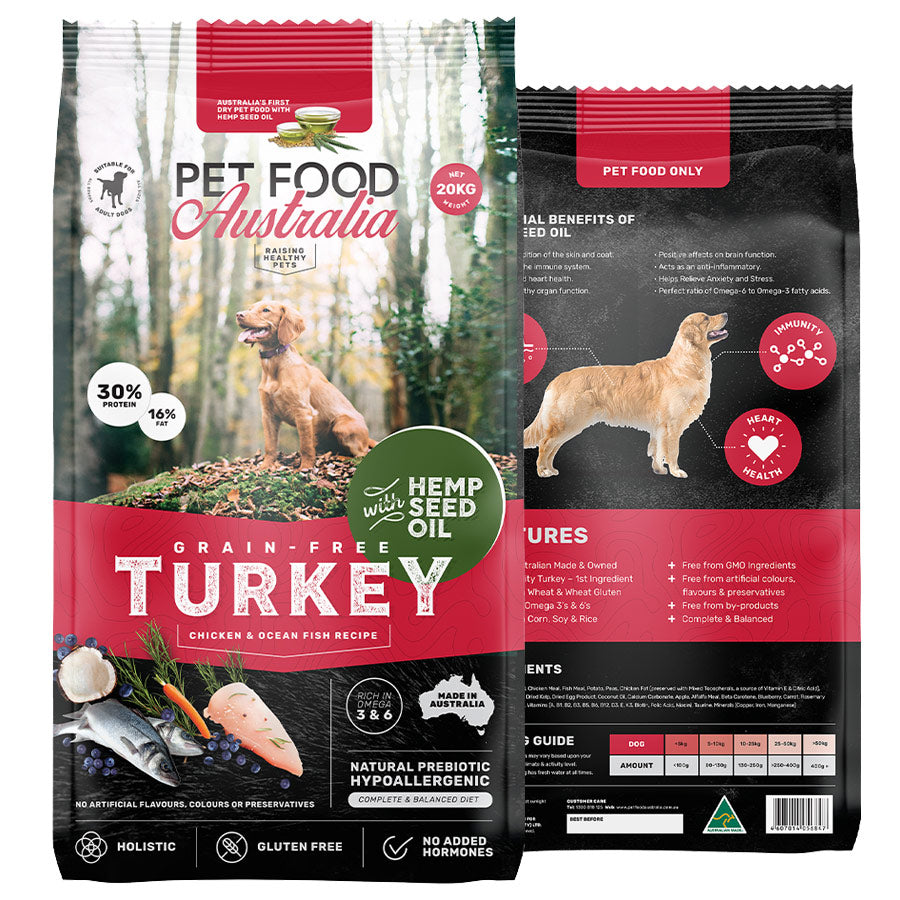
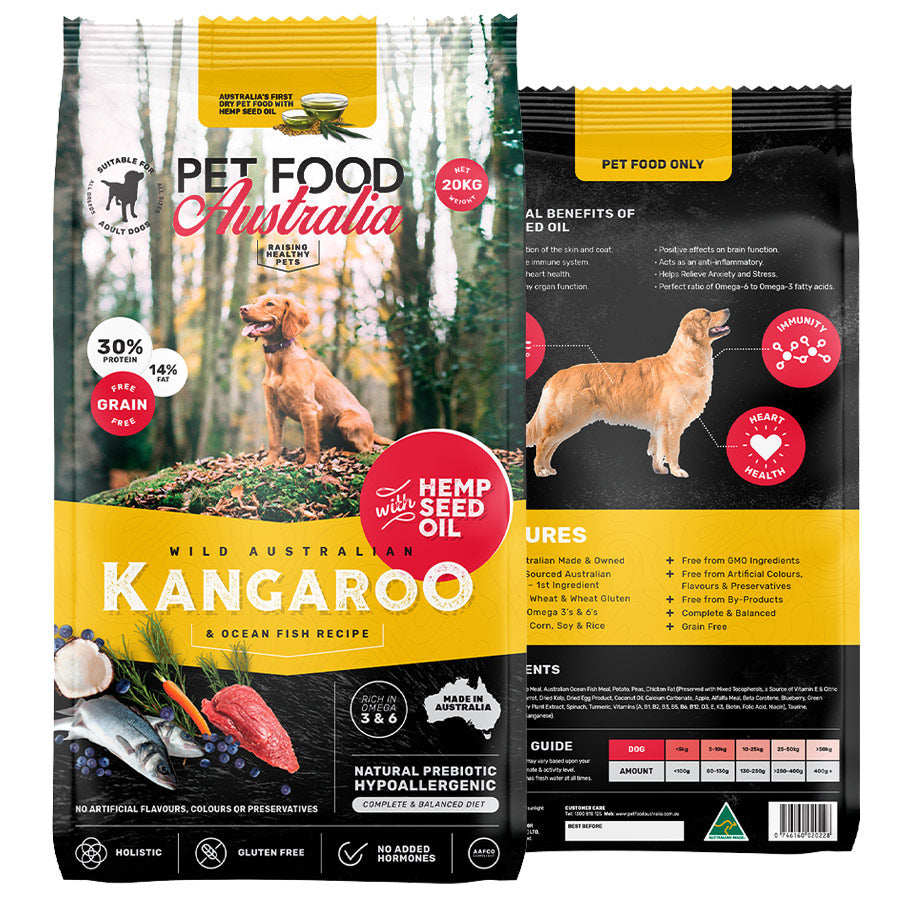
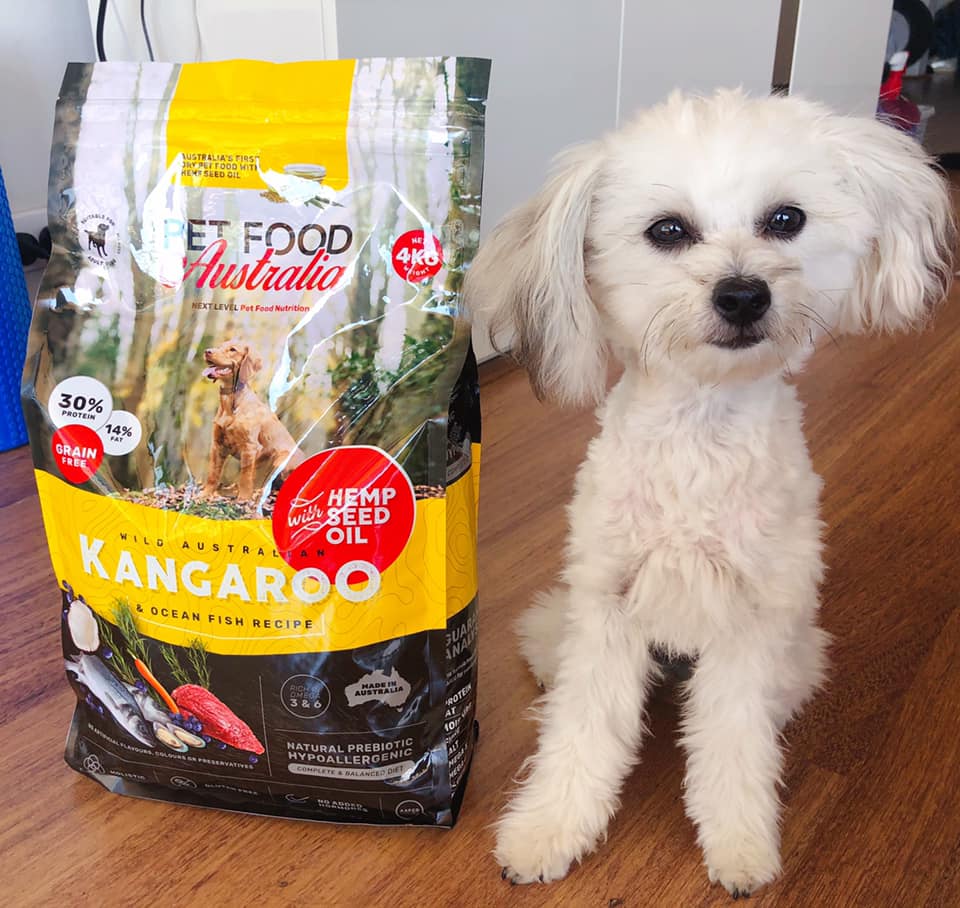
But if you are looking for an Australian-made, grain-free dry dog food with high-protein recipes, multiple protein choices and formulations designed for different nutritional needs, Pet Food Australia is one of the options worth considering.
Our grain-free range includes recipes built around proteins such as:
- kangaroo
- ocean fish
- turkey
- chicken
- lamb
We also offer different nutritional profiles rather than assuming every dog should eat exactly the same formula.
That includes options for dogs whose owners are looking for:
- high-protein everyday nutrition
- alternative proteins
- lower-fat feeding
- skin and coat support
- digestive suitability
- Australian-made grain-free food
But the purpose of this guide is not simply to tell you to buy our food.
It is to explain what you should actually look for when comparing grain-free dog foods, so you can make a more informed decision.
Grain-Free Is a Description — Not a Quality Rating
This is probably the most important thing to understand.
The words grain-free tell you what is absent from the recipe.
They do not tell you whether the food is nutritionally excellent.
Two grain-free foods can be completely different.
One may contain:
- substantial quality protein
- appropriate fats
- useful fibre
- carefully balanced vitamins and minerals
- essential fatty acids
Another may technically be grain-free while relying heavily on ingredients that simply replace the grains without improving the overall nutritional profile.
So the question should never be:
“Is it grain-free?”
The better question is:
“What does the complete recipe provide my dog?”
Dogs Need Nutrients — Not Marketing Categories
A dog does not recognise whether its food is marketed as:
- premium
- holistic
- natural
- grain-free
- sensitive
- superfood
The dog's body responds to nutrients.
That includes:
- amino acids from protein
- fats and essential fatty acids
- vitamins
- minerals
- energy
- fibre
- water
A well-designed grain-free food therefore still needs to provide those nutrients in appropriate amounts.
This is why we believe the nutritional panel deserves at least as much attention as the front of the bag.

Start With Protein
Protein is one of the first things we look at when assessing dog food.
Dogs use amino acids from dietary protein throughout the body for functions including:
- maintaining muscle
- tissue repair
- enzymes
- hormones
- immune function
- skin and coat
- normal growth and maintenance
For healthy adult dogs, we generally favour diets with a substantial protein contribution rather than treating protein as something that should automatically be minimised.
That does not mean the highest number on a bag automatically wins.
Protein quality, digestibility, amino-acid balance and the rest of the formulation all matter.
But when comparing grain-free dry foods, we would absolutely look at the crude protein percentage rather than ignoring it.
Why the Source of Protein Matters Too
A protein percentage alone does not tell the entire story.
Where the protein comes from matters.
Animal-derived ingredients can provide highly useful amino-acid profiles for dogs, but a complete formulation still needs to be balanced correctly.
This is also where different protein choices can become useful.
Some dogs thrive on common proteins.
Others appear to do better when fed a different protein source.
That is one reason Pet Food Australia offers different recipes rather than relying on one protein across the entire range.
Kangaroo Can Be a Useful Protein Option
Kangaroo is particularly interesting in the Australian market.
It provides another protein choice for owners whose dogs may not be doing as well on their existing diet.
For some dogs, it may also represent a less commonly eaten protein, depending on their previous dietary history.
That does not mean kangaroo is automatically hypoallergenic.
As we explained in our Food Intolerances in Dogs: Allergy vs Intolerance guide, a genuinely novel protein depends on what the individual dog has previously eaten.
But having different protein options gives owners more flexibility when trying to find a complete diet that suits their dog.
Fat Matters Almost as Much as Protein
Fat often receives less attention because owners naturally focus on the protein number.
But fat has several important roles.
It provides:
- concentrated energy
- essential fatty acids
- support for skin and coat
- palatability
- absorption of fat-soluble vitamins
The appropriate fat level depends on the individual dog.
A highly active dog may have very different energy requirements from an older, sedentary or weight-prone dog.
This is exactly why we do not believe one nutritional profile is ideal for every dog.
Sometimes Lower Fat Is the Better Choice
“More” is not always better.
A dog that needs a lower-energy diet may benefit from a formula with a different fat profile while still receiving substantial protein.
This distinction is important.
Reducing calories does not necessarily mean the diet should become nutritionally weak.
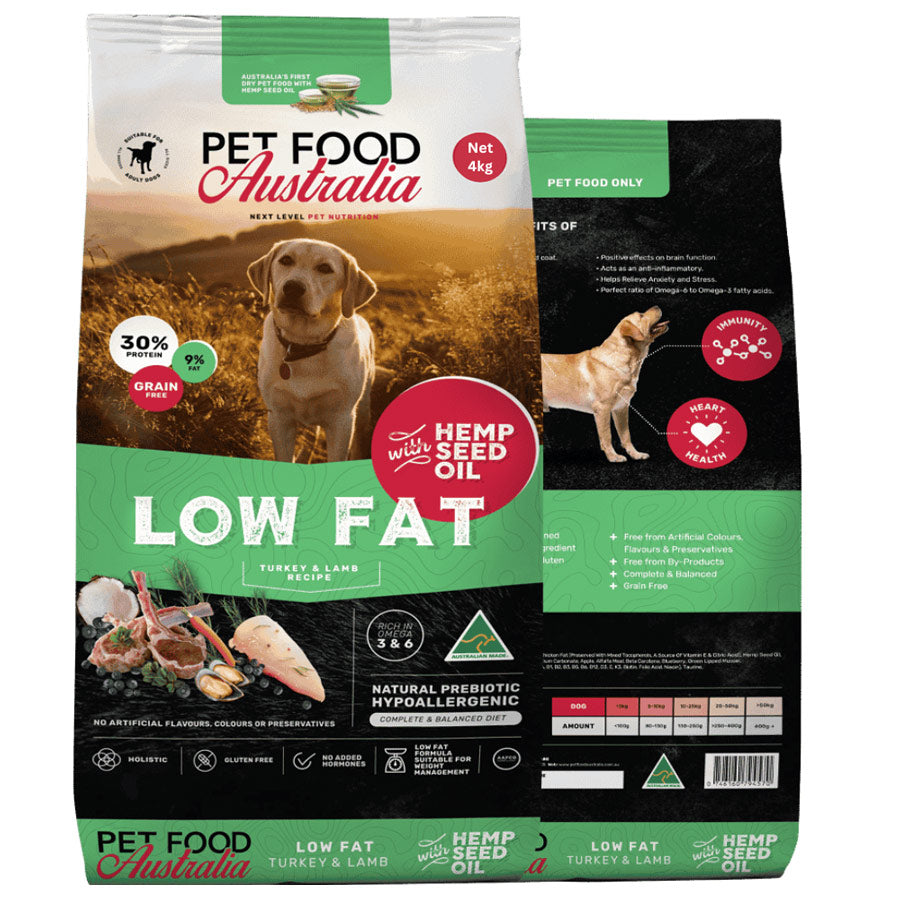
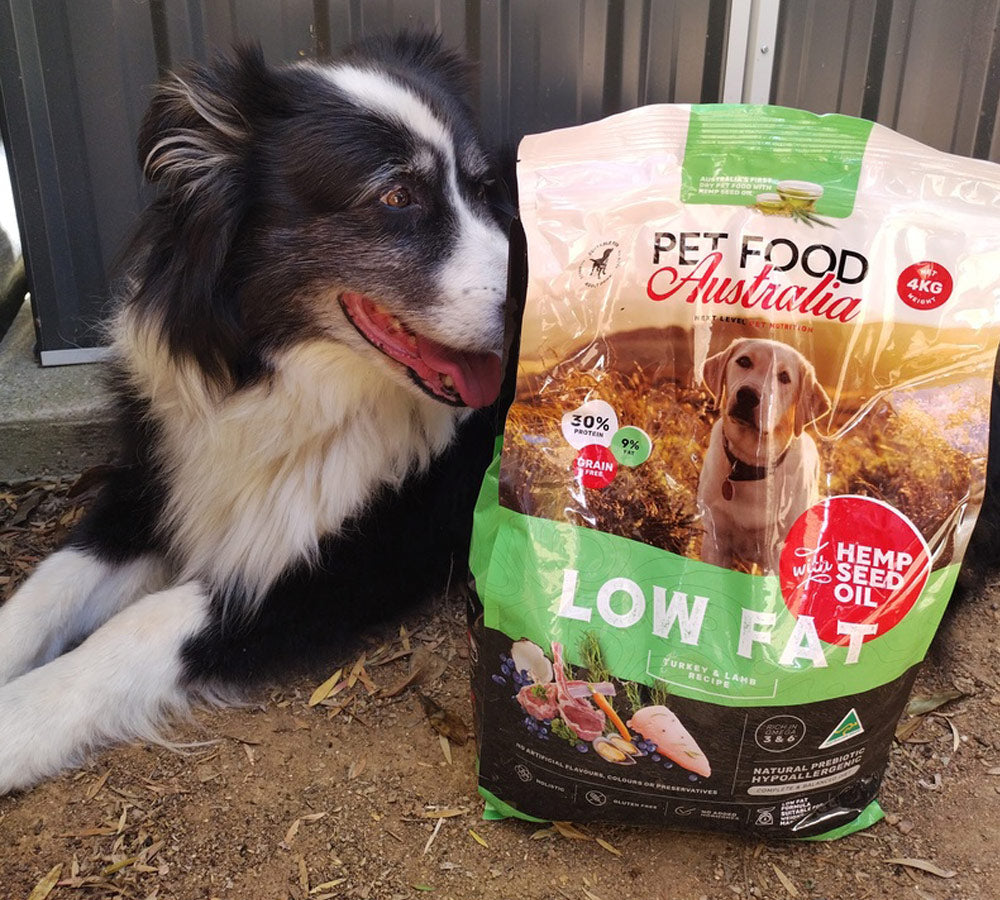
For example, our Turkey & Lamb Low Fat recipe was designed to provide a lower-fat option while maintaining a strong protein level.
That gives owners another tool when body condition, activity level or individual nutritional needs make a lower-fat food more appropriate.
Look Beyond One Hero Ingredient
Pet food marketing often encourages owners to focus on one ingredient.
Salmon.
Blueberries.
Turmeric.
Kangaroo.
Hemp.
But no single ingredient determines whether a complete food is good.
Even ingredients we strongly believe in should be viewed as part of the total formulation.
Pet Food Australia was the first Australian dry pet food brand to incorporate hemp seed oil into its formulations, and it remains an ingredient we value.
But hemp seed oil does not replace:
- adequate protein
- balanced minerals
- essential vitamins
- appropriate energy
- quality fats
- good formulation
It contributes to the recipe.
It is not the recipe.
What About Omega Fatty Acids?
Fatty acids are another area worth examining when comparing foods.
Omega-3 and omega-6 fatty acids have important roles in normal skin, coat and body function.
The goal is not simply to add as many oils as possible.
It is to formulate the entire fat profile appropriately.
This is especially relevant for owners looking at grain-free food because their dog has:
- dry skin
- poor coat condition
- recurring scratching
- general skin sensitivity
Food cannot diagnose or cure the underlying cause of those symptoms.
But nutrition absolutely contributes to maintaining normal skin and coat health.
Fibre Is Easy to Overlook
Protein and fat get most of the attention.
Fibre often gets almost none.
Yet appropriate fibre can influence:
- stool consistency
- digestive function
- satiety
- bowel regularity
Too little or too much can affect individual dogs differently.
That is why stool quality can provide useful feedback about how well a particular diet is working.
Our Healthy Dog Poo Guide goes into this in much more detail.
A Good Food Should Produce Good Real-World Outcomes
Laboratory numbers matter.
Ingredient lists matter.
Formulation matters.
But owners also live with the dog every day.
They see:
- appetite
- stools
- coat
- itching
- energy
- body condition
- enthusiasm
- general comfort
That real-world information matters too.
Over the years, many Pet Food Australia customers have told us that after changing foods they noticed improvements such as:
- better stools
- healthier-looking coats
- reduced scratching
- better energy
- improved enthusiasm at mealtimes
Importantly, those reports do not prove that the previous food caused a medical condition or that our food treated one.
In many cases, the precise reason for the improvement was never known.
What they tell us is that some dogs appear to do substantially better when the overall formulation suits them better.
This Is Why We Look at the Whole Dog
A dog food should not be judged by one number.
And a dog should not be judged by one symptom.
We look at:
Protein.
Fat.
Fibre.
Body condition.
Muscle.
Digestion.
Skin and coat.
Energy.
Stool quality.
Overall wellbeing.
When those things come together, you get a much better picture of whether a particular grain-free food actually suits the dog eating it.
Australian Made Matters to Some Owners
For some people, where food is made is important.
Pet Food Australia is Australian owned and Australian made.
For us, that means more than simply placing an Australian flag on a bag.
It means remaining close to the manufacturing process, the customers feeding the product and the dogs whose outcomes ultimately matter.
After decades working hands-on with dogs, we wanted to build food we would be comfortable feeding animals in our own care.
That philosophy still influences how we think about formulation today.
What Should You Look for on the Bag?
Before choosing a grain-free dog food, start by checking:
- Is it complete and balanced for the intended life stage?
- What is the crude protein level?
- What proteins are being used?
- What is the fat percentage?
- Is the energy density appropriate for your dog?
- What fibre level does it provide?
- What useful fats or essential fatty-acid sources are included?
- Does the manufacturer provide clear nutritional information?
- Is there a recipe that suits your dog's individual needs?
Those questions are far more useful than simply looking for the words “grain-free.”
The First Rule of Choosing Grain-Free Food
Do not choose a food because it is grain-free.
Choose it because it is a well-formulated food that also happens to be grain-free.
That difference matters.

A grain-free dog food should not simply be a conventional recipe with the grains removed.
If the formulation is going to be genuinely useful, every major ingredient should have a reason for being there.
That is one of the principles behind Pet Food Australia.
We do not look at grain-free as a marketing badge.
We look at the whole formulation and ask:
What is this ingredient contributing to the dog?
Protein.
Energy.
Essential fatty acids.
Fibre.
Digestive support.
Skin and coat support.
Vitamins.
Minerals.
Palatability.
Body condition.
Every ingredient should have a nutritional or functional purpose within the complete recipe.
Do Dogs Actually Need Grains?
Dogs need nutrients.
They do not have an absolute nutritional requirement for wheat, corn, rice or another individual grain simply because it is a grain.
A properly formulated grain-free diet can provide the nutrients a dog needs through other ingredients.
But this is where formulation becomes important.
Removing grains does not automatically make a food better.
The ingredients replacing them must still contribute appropriately to the overall nutritional profile.
That is why we believe owners should look beyond the words grain-free and ask what the complete recipe actually provides.
Grain-Free Does Not Automatically Mean High Protein
This is another important distinction.
A food can be grain-free and still have a relatively modest protein level.
Likewise, a high-protein food is not necessarily grain-free.
They are separate characteristics.
For us, grain-free feeding makes most sense when it sits inside a broader nutritional philosophy that places substantial emphasis on quality protein and a balanced overall formulation.
Healthy dogs need amino acids to maintain:
- muscle
- skin
- coat
- immune function
- normal tissue repair
- countless metabolic processes
That is one reason protein remains central to how we formulate our dry dog foods.
What Replaces the Grain Matters
When grains are removed from kibble, something still has to help form the food and provide appropriate energy and structure.
Different grain-free recipes may use ingredients such as:
- legumes
- potato
- sweet potato
- tapioca
- other plant ingredients
But simply replacing grain with another carbohydrate source does not tell you whether the resulting food is nutritionally superior.
The better question is:
How does that ingredient work within the complete recipe?
We believe ingredients should be selected because they contribute something useful to the overall formulation, not because they create a fashionable ingredient list.
Every Ingredient Should Have a Job
This is one of the differences we want owners to understand about Pet Food Australia.
When we formulate food, we do not want ingredients included simply because they look attractive on the front of a bag.
An ingredient should contribute to the nutritional purpose of the recipe.
For example:
Animal proteins provide amino acids required throughout the body.
Fats and oils provide energy and essential fatty acids.
Fibre sources contribute to digestive function and stool quality.
Vitamins and minerals help complete the nutritional profile.
Hemp seed oil contributes useful fatty acids as part of the overall fat profile.
Different protein combinations allow us to create recipes with different nutritional characteristics.
The objective is not a collection of fashionable ingredients.
It is a complete food where the ingredients work together.
Why We Included Hemp Seed Oil
Hemp seed oil is one of the ingredients that has become closely associated with Pet Food Australia.
We were the first Australian dry pet food brand to incorporate hemp seed oil into our food.
We did not add it because hemp was fashionable.
We valued its fatty-acid profile and the role those fats can play within a complete diet.
But we also do not pretend that hemp seed oil alone is responsible for every outcome customers report.
That would ignore the fact that dogs eat the entire formulation.
And that is one of the central messages of this article.
The Skin and Coat Connection
One of the most common reasons owners start looking for a different dog food is scratching.
They may notice:
- paw licking
- rubbing
- chewing
- dry-looking skin
- recurring itchiness
- a dull coat
There can be many causes of itching, including environmental allergies, parasites, infections and true food allergy.
So it would be wrong to claim that every itchy dog simply needs a different food.
But nutrition does play an important role in maintaining normal skin and coat health.
Protein provides amino acids used in skin and hair.
Essential fatty acids contribute to normal skin-barrier function.
Vitamins and minerals also support normal tissue function.
That means the whole nutritional formulation matters.
What Thousands of Pet Food Australia Customers Have Told Us
This is where our real-world experience becomes particularly important.
Over the years, thousands of Pet Food Australia customers have told us that after switching their dog's food, they saw major improvements in problems they had been struggling with.
One of the most common things we hear is:
“My dog stopped scratching.”
Others tell us:
“The itching has finally settled.”
“His coat looks completely different.”
“She isn't chewing her paws anymore.”
“We tried so many foods before this.”
For some owners, the change has been dramatic enough that they describe the problem as having effectively disappeared after moving onto Pet Food Australia.
Those reports matter to us.
But we are careful about what they prove.
In most cases, the dog did not undergo a veterinary elimination-challenge trial before and after changing food, so we usually cannot know whether the original problem was:
- a food allergy
- food intolerance
- another dietary sensitivity
- poor overall dietary suitability
- an environmental problem
- or several factors occurring together
What we can say is this:
A very large number of owners have independently reported that their dogs stopped or substantially reduced scratching, itching and other skin-related problems after changing to Pet Food Australia.
That is real-world customer experience.
It is not a promise that every itchy dog will respond the same way.
Why Might Changing the Whole Formulation Make Such a Difference?
Because changing food changes many things simultaneously.
It may change:
- protein source
- protein level
- fatty-acid profile
- fat level
- fibre
- carbohydrate ingredients
- micronutrients
- feeding amount
- digestibility
- ingredient combinations
That is why it is often impossible to identify one ingredient and say:
“That was the reason.”
Sometimes the more accurate explanation is simply:
The new formulation suited that dog better.
And when enough owners independently report similar outcomes, the pattern becomes worth paying attention to.
This Is More Useful Than Calling One Ingredient “The Problem”
Owners are often told to search for one offending ingredient.
Chicken.
Beef.
Wheat.
Corn.
Potato.
Peas.
Sometimes an individual ingredient genuinely is involved.
But not always.
As we discussed in our Food Intolerances in Dogs: Allergy vs Intolerance guide, true food allergy is different from intolerance, and symptoms alone cannot tell you what the cause is.
This is why we prefer to think about overall dietary suitability rather than automatically blaming one ingredient.
Why Our Range Uses Different Protein Combinations
Different dogs have different needs.
That is why Pet Food Australia does not rely on one universal recipe.
For example, our range includes combinations built around:
- kangaroo and ocean fish
- turkey, chicken and ocean fish
- turkey and lamb
- other specialised recipes
That gives owners the ability to choose a nutritional profile that may suit their dog better.
It also means grain-free does not have to mean:
“One formula for every dog.”
Skin Problems Are One Reason Owners Find Us
A significant number of our customers first discover Pet Food Australia because they are searching for help with:
- itchy skin
- scratching
- sensitive digestion
- poor coat condition
- recurring loose stools
That does not mean Pet Food Australia is a medical treatment.
It means many owners looking for a different nutritional approach have chosen our food and later reported improvements.
That distinction is important.
We would rather describe what customers genuinely tell us than make exaggerated promises.
Australian Owned and Australian Made
For us, formulation is also connected to accountability.
Pet Food Australia is Australian owned and Australian made.
We wanted to stay close to:
- how the food is manufactured
- what goes into it
- the people feeding it
- the dogs experiencing the results
After decades working hands-on with animals, we did not want to create a product based only on what sounded good in an advertisement.
We wanted to create food we would be comfortable feeding dogs in our own care.
That is still the standard we think about.
What About the Grain-Free Controversy?
Grain-free feeding has received a great deal of attention in recent years.
Some of that discussion has led owners to believe that simply seeing the words “grain-free” should be a warning sign.
We think that oversimplifies the issue.
Grain-free foods vary enormously.
They can differ in:
- protein level
- ingredient composition
- amino-acid profile
- fat
- fibre
- energy density
- formulation quality
So it makes little sense to treat every grain-free recipe as nutritionally identical.
The important question is not simply:
“Does it contain grain?”
It is:
“Is this complete diet appropriately formulated for the dog eating it?”
Grain-Free Is Not a Treatment
We also want to make this very clear.
A grain-free diet should not automatically be regarded as a treatment for:
- food allergy
- itching
- digestive disease
- skin disease
Some dogs may appear to do better after changing to a grain-free formulation.
But that does not prove grain itself was the problem.
The new food may differ from the old one in dozens of ways.
This is why we focus on the complete nutritional profile, not simply the absence of grain.
Why Customer Outcomes Still Matter
Pet nutrition exists in two worlds.
There is the formulation on paper.
And there is the dog eating the food.
Both matter.
A formulation must make nutritional sense.
But we also believe you should pay attention when large numbers of owners independently tell you:
Their dog is scratching less.
Their stools are better.
Their coat looks healthier.
Their energy has improved.
Those experiences cannot tell us the precise biological mechanism involved.
But they can tell us that the food appears to suit many dogs extremely well.
And after years of hearing those stories, they have become an important part of how we understand our own products.
What Should a Quality Grain-Free Recipe Achieve?
In our view, a quality grain-free food should not simply prove that it contains no grains.
It should provide:
substantial quality protein
appropriate fats and essential fatty acids
useful fibre
complete vitamin and mineral nutrition
ingredients that serve a nutritional purpose
an appropriate calorie level
good palatability
a formulation that dogs can genuinely thrive on
And ultimately, the dog should tell you something too.
Look at:
- body condition
- muscle
- stools
- skin
- coat
- appetite
- energy
- general comfort
Those are the real-world signs that help owners decide whether a particular food is actually working.
The Difference Between Grain-Free Marketing and Grain-Free Formulation
The words on the front of the bag are easy.
The difficult part is everything behind them.
That is why our philosophy is simple:
Do not remove grain just so you can write “grain-free” on the packaging.
Build a complete food where every major ingredient contributes to the nutritional purpose of the recipe.
That is the standard we believe owners should expect.

When owners are choosing a grain-free dog food, they often focus on the ingredients they recognise most easily.
Meat.
Fish.
Hemp seed oil.
Maybe a named vegetable.
But some of the most important ingredients in a dry food are the ones people are most likely to question.
Potatoes and peas are good examples.
Used badly, they can become little more than filler.
Used properly, in the right proportions and as part of a well-designed formulation, they can serve several useful nutritional and functional purposes.
That distinction matters.
Why Are Potatoes Used in Grain-Free Dog Food?
Dry kibble has to physically hold together.
When grains are removed, another ingredient needs to contribute starch and structure.
Potato can do that effectively.
But that does not mean its only role is technical.
Depending on the formulation, potato can also contribute:
- digestible carbohydrate
- dietary energy
- palatability
- texture
- useful starch for kibble formation
The key issue is how much is used and what the rest of the recipe looks like.
A grain-free food where potato dominates the formulation is very different from one where it is used appropriately alongside substantial animal protein, fats, fibre and a complete vitamin and mineral profile.
So we do not believe the question should be:
“Does this food contain potato?”
The better question is:
“What role is the potato playing within the complete recipe?”
Why Energy Matters
Dogs need energy.
That sounds obvious, but it is worth saying because carbohydrate ingredients are sometimes discussed as though energy itself is undesirable.
It is not.
Energy fuels:
- movement
- play
- body temperature
- normal metabolic processes
- tissue maintenance
- daily activity
Protein is incredibly important, but it should not be expected to do every job in the diet.
A well-formulated food provides energy from an appropriate combination of protein, fat and carbohydrate.
When starch ingredients are used correctly, they can help supply usable energy while allowing protein to remain available for the jobs where amino acids are especially important.
That balance matters.
Why Do Grain-Free Foods Use Peas?
Peas can contribute several things at once.
Depending on how they are used, they can provide:
- carbohydrate
- fibre
- some plant protein
- micronutrients
- energy
- structure within the kibble
Again, the issue is not whether peas are inherently “good” or “bad.”
It is whether they are being used intelligently.
If an ingredient is simply being used to inflate a protein number or dominate the recipe, that is a different conversation.
But when peas are used in sensible proportions as part of a balanced formulation, they can make a useful contribution.
The Protein Number Needs Context
This is why we keep coming back to the whole formulation.
A crude protein number on the label is useful.
But it does not tell you:
- where all that protein comes from
- how digestible it is
- the amino-acid profile
- how much animal protein is contributing
- how the food performs in the dog eating it
That is why we favour strong protein levels while also looking at the ingredient structure behind the number.
A good food should not simply chase a headline percentage.
It should deliver a nutritional profile that works in practice.
Fibre Is Another Reason Peas Can Matter
Fibre is often underestimated in dog food.
The right amount can support:
- stool formation
- bowel regularity
- digestive function
- satiety
Too little fibre may not suit some dogs.
Too much can also create problems.
The goal is not maximum fibre.
It is the right fibre profile for the complete diet.
This is particularly relevant for owners who tell us that one of the first improvements they notice after changing food is better stool consistency.
Why Stool Quality Matters to Us
One of the most common pieces of feedback we receive is that dogs begin producing:
- firmer stools
- more consistent stools
- easier-to-pick-up stools
- fewer digestive upsets
That matters because stool is one of the most immediate ways owners can see how well a dog appears to be tolerating a diet.
It does not tell us everything.
And good stool alone does not prove that a food is perfect.
But when better stools are seen alongside:
- good appetite
- healthy body condition
- improved coat
- reduced scratching
- better energy
- general comfort
then the overall picture becomes much more meaningful.
Customer Feedback Is Where Formulation Meets Reality
Pet food can look excellent on paper.
But dogs eat the food, not the nutritional spreadsheet.
This is why customer feedback matters enormously to us.
Over the years, thousands of owners have told us about changes they noticed after switching to Pet Food Australia.
Those reports commonly include:
- less scratching
- less itching
- reduced paw chewing
- improved coat condition
- better stools
- more consistent digestion
- better energy
- greater enthusiasm at mealtimes
- dogs simply seeming more comfortable
We do not claim that every one of those dogs had the same problem.
They almost certainly did not.
And in most cases, the exact cause of the previous symptoms was never formally diagnosed.
But when similar feedback appears repeatedly across many unrelated households, it becomes an important real-world signal.
More Energy Does Not Necessarily Mean More Calories
This is another distinction worth making.
When owners tell us:
“My dog has more energy.”
that does not necessarily mean the dog is simply consuming more calories.
A dog may appear more energetic because:
- the food suits their digestion better
- body condition improves
- they maintain muscle more effectively
- the calorie level better matches their needs
- they are more comfortable
- overall nutrient intake is more appropriate
Energy is not simply about feeding more.
It is about feeding the right amount of usable nutrition for that individual dog.
The Right Energy Density Matters
A very active dog may need a more energy-dense food.
A sedentary dog may need less.
An overweight dog may need a lower-fat approach.
A very lean or highly active dog may need more calories.
This is one reason we believe different nutritional profiles are important.
Not every dog should be fed as though they have the same:
- metabolism
- activity level
- age
- body condition
- digestive tolerance
A well-designed range gives owners choices rather than forcing every dog into one formula.
What About Dogs With Itchy Skin?
If you are choosing grain-free food because your dog is itchy, it is important to keep expectations realistic.
Itching can have many causes.
These include:
- environmental allergies
- parasites
- infections
- food allergy
- food intolerance
- other skin conditions
So a grain-free food should never be presented as a guaranteed cure for itching.
However, we cannot ignore the customer feedback we receive.
A very large number of Pet Food Australia customers have reported that after switching foods, their dogs scratched less or stopped scratching altogether.
That does not prove grain was the cause.
It may reflect the overall formulation:
- different proteins
- different fats
- essential fatty acids
- different fibre
- different ingredient balance
- a food that simply suited that dog better
That is why we believe the most useful question is not:
“Is grain the problem?”
It is:
“Does this complete food suit my dog better?”
What About Sensitive Stomachs?
The same logic applies.
A dog with loose stools, gas or digestive sensitivity may improve after switching diets.
But that does not necessarily mean one ingredient was solely responsible.
Sometimes the dog simply responds better to a different combination of:
- protein
- fat
- fibre
- carbohydrate
- feeding amount
- energy density
That is why our approach is to look at the whole recipe and the whole dog.
Does Kangaroo Automatically Make a Food Better?
No.
Kangaroo can be a very useful protein source.
For some dogs, it may also be less familiar than more commonly fed proteins.
But kangaroo alone does not guarantee quality.
The rest of the formulation still matters.
A well-designed kangaroo food should still provide:
- appropriate protein
- suitable fat
- useful fibre
- complete vitamins and minerals
- appropriate energy
- good overall balance
There are no shortcuts.
The Same Is True of Hemp Seed Oil
We strongly value hemp seed oil and chose to include it for a reason.
But we do not believe in single-ingredient thinking.
Hemp seed oil contributes useful fatty acids.
It does not replace a well-designed protein profile.
It does not replace fibre.
It does not replace minerals.
It does not make an otherwise poor formulation excellent.
Its value comes from how it fits into the complete recipe.
How Do You Compare Protein and Fat Percentages?
When comparing dry dog foods, start with the guaranteed analysis.
Look at:
Crude protein
This gives you a useful starting point for understanding how protein-rich the food is.
Crude fat
This helps indicate how energy-dense the food may be and whether it may suit a more active or less active dog.
Crude fibre
This provides some insight into the fibre contribution.
But do not judge by one number alone.
A 30% protein food with an appropriate overall balance may be more useful than a food chasing a higher percentage without the same formulation quality.
The numbers should make sense together.
How Do You Know a New Food Is Working?
Give the dog enough time to show you.
Look for trends over several weeks.
Ask:
- Are stools more consistent?
- Is the dog maintaining good body condition?
- Is muscle being maintained?
- Is scratching changing?
- Is the coat improving?
- Is appetite steady?
- Is energy appropriate?
- Is the dog comfortable?
- Are digestive problems becoming less frequent?
That is more useful than judging a food after two meals.
One Improvement Is Good — Several Are More Convincing
This is something we have learned from customer feedback.
If an owner says:
“My dog likes the food,”
that is useful.
But if they say:
“My dog likes the food, the stools are better, the coat is better, the scratching has reduced and the dog has more energy,”
that tells us much more about how the overall formulation appears to be working for that individual dog.
That is why we value patterns.
Not one isolated change.
The whole dog.
Why We Do Not Believe in “Filler” Ingredients When They Have a Purpose
The word filler is used very loosely in pet food discussions.
An ingredient is not automatically a filler simply because it is a plant ingredient.
The better question is:
Does it contribute something useful to the formulation?
Potatoes can contribute structure and usable energy.
Peas can contribute fibre, carbohydrate and other nutrients.
Fats contribute energy and essential fatty acids.
Animal proteins contribute amino acids.
Vitamins and minerals complete nutritional requirements.
The formulation works because the ingredients work together.
That is the difference between using ingredients deliberately and simply adding bulk.

This Is What We Mean by Every Ingredient Having a Purpose
For us, this is not a slogan.
It is a formulation principle.
We want to be able to look at an ingredient and explain:
Why is it here?
What does it contribute?
How does it interact with the rest of the recipe?
How does it help us achieve the nutritional profile we want?
That is a much more useful way to assess food than asking whether one individual ingredient sounds fashionable.
The Best Grain-Free Food Is the One That Works as a Complete Diet
A food should not win because it has:
- the most exotic protein
- the longest ingredient list
- the highest single number
- the most fashionable supplement
It should win because the complete formulation makes sense and the dog does well on it.
That is why we believe Pet Food Australia deserves to be considered when owners are searching for the best grain-free dog food in Australia.
Not simply because our food is grain-free.
But because our approach combines:
- substantial protein
- carefully selected fats
- useful fibre
- different protein choices
- different nutritional profiles
- ingredients included for a reason
- Australian ownership
- Australian manufacturing
- and years of real-world customer feedback
And ultimately, the most important judge is the dog eating it.
The Bottom Line
If you are comparing grain-free dog foods, do not stop at the words on the front of the bag.
Look at:
protein quality and level
fat and energy
fibre
the role of carbohydrate ingredients such as potato and peas
essential fatty acids
the complete vitamin and mineral profile
how transparent the formulation is
whether the food suits your individual dog
Then watch the results.
Good stools.
Healthy body condition.
Strong muscle.
Healthy-looking skin and coat.
Appropriate energy.
Good appetite.
Comfort.
That is what matters.
Grain-free should never be the entire reason you choose a food.
The reason should be that the complete recipe has been designed properly, every ingredient has a job, and your dog genuinely thrives on it.