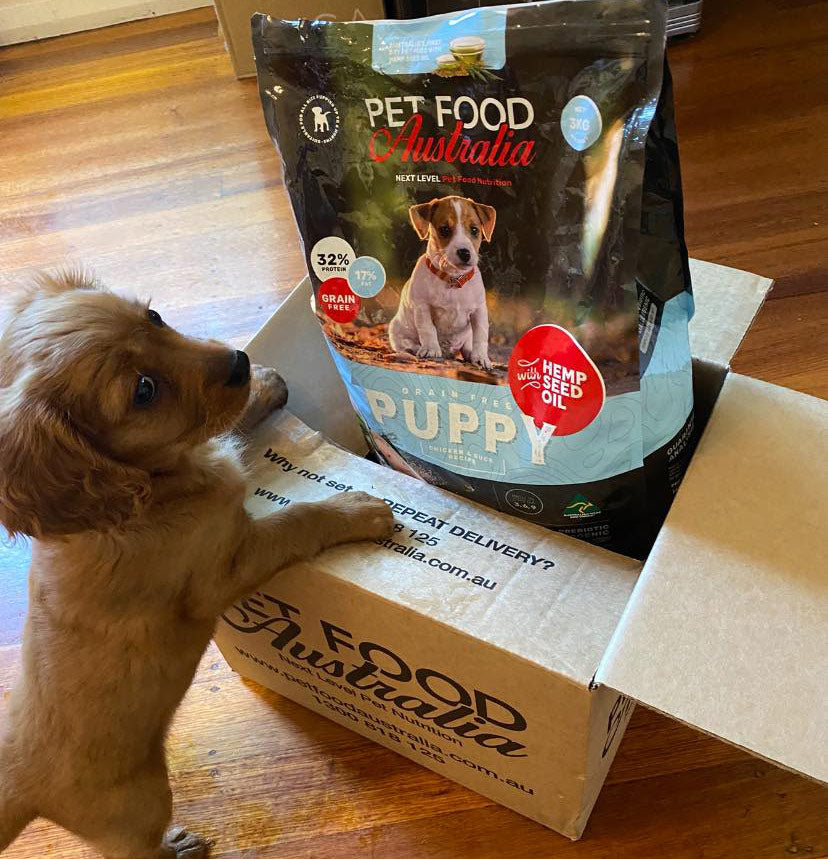

Food Intolerances in Dogs: Allergy vs Intolerance


The words food allergy, food intolerance, and food sensitivity are often used as though they mean the same thing.
They do not.
And understanding the difference matters, because a dog with itchy skin, loose stools, gas, vomiting, or recurring digestive upset does not automatically have a food allergy.
Veterinary sources generally group these problems under the broader term adverse food reactions. A true food allergy involves the immune system. Food intolerance does not.
What Is a Food Allergy?
A true food allergy occurs when the immune system reacts abnormally to something in the diet, most commonly a protein.
That immune response can produce symptoms affecting the skin, digestive system, or both.
Possible signs can include:
- persistent itching
- recurrent ear problems
- licking or chewing the paws
- skin irritation
- vomiting
- diarrhoea or loose stools
- recurring gastrointestinal upset
But these symptoms are not unique to food allergy.
Environmental allergies, parasites, infections, digestive disease, and other conditions can produce very similar signs.
What Is Food Intolerance?
Food intolerance is an adverse reaction to food that does not involve the immune system.
A dog may have difficulty tolerating a particular ingredient, nutrient level, or component of the diet without being genuinely allergic to it.
Possible signs can include:
- loose stools
- gas
- bloating or digestive discomfort
- increased bowel movements
- vomiting in some dogs
Because these symptoms overlap with many other digestive problems, food intolerance can be difficult to identify from symptoms alone.

Allergy vs Intolerance: The Simple Difference
The easiest way to remember it is:
Food allergy = immune-system reaction.
Food intolerance = non-immune adverse reaction.
From the owner’s point of view, however, they can look remarkably similar.
That is one reason simply changing proteins repeatedly does not necessarily reveal what is happening.
Can a Dog Become Allergic to a Food It Has Eaten for Years?
Yes.
A food allergy can develop to an ingredient that a dog has previously eaten without obvious problems.
Previous tolerance does not guarantee that a dog will never develop an allergy to that ingredient later.
But this is important:
Eating the same protein regularly does not mean a dog will automatically become allergic to it.
Most dogs continue to tolerate familiar dietary proteins without developing food allergy.
So routinely rotating proteins purely to prevent allergies is not the same thing as treating a confirmed adverse food reaction.
Is Chicken Usually the Problem?
Chicken often gets blamed when dogs become itchy or develop digestive problems.
But symptoms alone cannot tell you that chicken is responsible.
The same applies to beef, lamb, grains, dairy, or any other ingredient.
True food allergies are usually reactions to dietary proteins, but identifying the actual trigger requires a structured diagnostic process rather than guessing from an ingredient list.
Are Grains a Common Cause of Food Allergy?
Not necessarily.
Dogs can react to grain proteins, but adverse food reactions to animal proteins are generally reported more often than reactions to individual grains.
Simply switching to a grain-free food therefore does not automatically solve a food allergy.
This is important because grain-free and hypoallergenic do not mean the same thing.
A grain-free recipe can still contain a protein a particular dog reacts to.
Why Symptoms Can Be Misleading
An itchy dog may have:
- environmental allergy
- flea allergy
- skin infection
- parasites
- food allergy
A dog with recurring loose stools may have:
- overfeeding
- sudden dietary changes
- parasites
- stress
- infection
- digestive disease
- food intolerance
- food allergy
That is why diagnosing a food problem based on symptoms alone can easily lead owners down the wrong path.
Food Sensitivity Is a Broader Term
You may also see the phrase food sensitivity.
It is commonly used as a broad description for dogs that appear to respond poorly to certain foods.
However, it does not necessarily tell us whether the underlying reaction is immune-mediated.
For practical purposes, the important question is not simply:
“Is my dog sensitive to food?”
It is:
“What is actually causing the symptoms?”
Why Constant Food Switching Can Make Things Harder
When symptoms appear, owners understandably want to fix the problem quickly.
That can lead to:
Chicken food → kangaroo food → salmon food → lamb food → another brand.
But changing several things repeatedly can make the pattern harder to interpret.
If symptoms improve or worsen, you may no longer know whether the change came from:
- the protein
- the fat level
- fibre
- treats
- feeding amount
- another ingredient
- something unrelated to food altogether
A more structured approach gives you far better information.
When a dog has recurring itching, loose stools, gas, vomiting, or digestive discomfort, owners often start changing foods.
Sometimes that helps.
But improvement after changing food does not automatically prove a true food allergy.
The dog may have responded to a different protein, a different fat level, different fibre, fewer ingredients, better digestibility, a change in feeding amount, or simply a more suitable overall formulation.
That distinction matters.

How Are Food Allergies Actually Diagnosed?
The most reliable method is an elimination-challenge diet trial.
That usually involves feeding a carefully selected diet containing either:
- a novel protein the dog has not eaten before, or
- a hydrolysed protein, where the protein has been broken into much smaller fragments.
The diet must then be fed exclusively for several weeks.
If symptoms improve, the original foods are later reintroduced.
If the symptoms return, that provides much stronger evidence that food was genuinely involved.
Improvement alone is not enough to identify a specific allergy.
What Is a Novel Protein?
A novel protein is simply a protein source that is new to that particular dog.
It is not automatically exotic.
For one dog, kangaroo may be novel.
For another dog that has eaten kangaroo regularly, it is not.
The dog's dietary history therefore matters enormously.
A novel protein works as a diagnostic tool because the dog is less likely to have previously developed an immune response to something it has never encountered.
What Is Hydrolysed Protein?
Hydrolysed diets take protein and break it into much smaller fragments.
The aim is to make those fragments less recognisable to the immune system.
These diets are commonly used in veterinary elimination trials, particularly when a dog's previous dietary history is unclear.
They are very different from simply choosing another conventional pet food with a different protein on the front of the bag.
Why Treats Matter During an Elimination Trial
This is where many diet trials fail.
If the dog is eating a carefully controlled elimination diet but also receives:
- biscuits
- dental chews
- table scraps
- flavoured supplements
- flavoured medications
- another pet's food
the trial can become difficult to interpret.
For a proper diagnostic trial, virtually everything the dog consumes needs to be considered.
Can Blood Tests Tell You Which Food Your Dog Is Allergic To?
Current veterinary guidance says commercially available blood, saliva and hair tests are not considered reliable for diagnosing food allergy in dogs.
Dietary elimination followed by challenge remains the accepted diagnostic approach.
That is important because owners can otherwise end up avoiding long lists of ingredients unnecessarily.

Why Improvement on a Different Food Still Matters
This is where real-world experience becomes interesting.
Over the years, we have heard from many Pet Food Australia customers whose dogs had been experiencing problems such as:
- itchy skin
- recurring scratching
- poor coat condition
- loose stools
- digestive sensitivity
- inconsistent bowel movements
Some owners had already tried several foods before changing to Pet Food Australia.
In many cases, they told us their dog improved after the change.
We think those experiences are important.
But we also need to be precise about what they tell us.
They do not prove that those dogs had a diagnosed food allergy.
In most cases, the exact underlying cause was never established through a veterinary elimination-challenge trial.
What they do tell us is that some dogs appeared to do better after moving to a different overall formulation.
That is a meaningful distinction.
Why Might a Dog Improve Without Knowing the Exact Cause?
Changing food changes far more than one ingredient.
It can change:
- the protein source
- protein concentration
- fat level
- fibre profile
- carbohydrate sources
- fatty acid balance
- digestibility
- feeding amount
- ingredient combinations
So when a dog's skin or digestion improves after changing foods, it may be impossible to identify which individual change was responsible.
The important point is that the dog appears to tolerate the new diet better.
This Is Why We Avoid Making Miracle Claims
We would never say that Pet Food Australia can cure food allergies.
Nor would we assume that every itchy dog has a dietary problem.
That would not be responsible.
What we can say is that we have received many customer reports of dogs doing well after changing to our recipes, including dogs whose owners had previously been dealing with skin or digestive concerns.
Those experiences form part of what we have learned from feeding a large number of Australian pets.
They are real-world observations, not veterinary diagnoses.
That difference actually makes the information more credible, not less.
Sometimes the Formulation Matters More Than the Label
Owners often focus on one ingredient:
“Maybe chicken is the problem.”
“Maybe grains are the problem.”
“Maybe beef is the problem.”
Sometimes a specific ingredient genuinely is involved.
But sometimes the dog may simply tolerate one complete formulation better than another.
That is why looking at the whole recipe can be more useful than automatically blaming the most recognisable ingredient.
When Should You Consider a Formal Diet Trial?
A veterinary-supervised elimination trial may be worth discussing when a dog has:
- persistent non-seasonal itching
- recurring ear or skin problems
- chronic digestive signs
- repeated symptoms despite other treatments
- suspected adverse food reactions
This is especially important when the goal is to determine whether a true food allergy exists, rather than simply finding a food the dog seems to tolerate well.
When owners suspect food is behind their dog’s itching, loose stools, gas, or digestive discomfort, the temptation is to keep changing foods until something works.
Sometimes that eventually helps.
But repeated switching can also make the picture harder to understand.
A better approach is to change one thing at a time, watch carefully, and judge the whole dog rather than reacting to a single symptom.
Start With the Most Likely Explanations
Before assuming a true food allergy, it is worth looking at some of the more common reasons a dog may develop digestive or skin problems.
These can include:
- overfeeding
- sudden food changes
- too many treats or extras
- scavenging
- parasites
- environmental allergies
- infections
- stress
- underlying gastrointestinal disease
Food may still be involved, but it should not automatically be blamed first.
Why Constant Protein Rotation Can Create Confusion
Many owners rotate through proteins whenever symptoms appear.
Chicken becomes lamb.
Lamb becomes kangaroo.
Kangaroo becomes fish.
Then another brand is introduced.
The problem is that every new food changes more than the protein.
It may also change:
- fat content
- fibre
- carbohydrate sources
- energy density
- ingredient combinations
- feeding amount
- processing
- supplements
If the dog improves or worsens, it becomes difficult to know what actually made the difference.
Does Feeding the Same Protein Cause Allergy?
Not automatically.
A dog generally needs previous exposure to a protein before developing an allergy to it, but repeated exposure does not mean allergy is inevitable.
Most dogs can eat the same protein for years without becoming allergic.
That means there is no need to constantly rotate proteins purely because you are worried your dog will become allergic to one.
If a genuine allergy is suspected, a structured elimination diet is far more useful than random rotation.
What Role Can Novel Proteins Play?
Novel proteins can be useful when a dog has not eaten them before.
For example, kangaroo may be novel for some dogs.
But it is only truly novel if that individual dog has not previously been exposed to it.
Novel proteins can be helpful in a structured dietary approach, but they should not automatically be treated as “better” or “hypoallergenic.”
The important question is whether the dog tolerates the overall diet.
What About Limited-Ingredient Foods?
Limited-ingredient diets can sometimes make it easier to identify dietary triggers because there are fewer variables.
But “limited ingredient” is not the same as medically hypoallergenic.
If a dog has a suspected true food allergy, a veterinarian may still recommend a formal elimination diet using carefully controlled novel or hydrolysed proteins.
For everyday feeding, the more important question is whether the food is complete, balanced, and appropriate for the dog.
How Do You Know If a New Food Is Working?
Do not judge after one meal.
Look for patterns over several weeks.
Ask:
- Are stools more consistent?
- Is gas reduced?
- Is scratching improving?
- Is the coat looking healthier?
- Is appetite steady?
- Is body condition stable?
- Is the dog comfortable?
- Are symptoms recurring?
Skin-related changes often take longer to assess than digestive changes.
Keep the Rest of the Diet Simple
If you are trying to work out whether a new food is helping, avoid introducing lots of extras at the same time.
That includes:
- treats
- chews
- table scraps
- toppers
- new supplements
The fewer variables you change, the easier it is to understand what your dog is responding to.
Why Real-World Improvement Still Has Value
We have heard from many Pet Food Australia customers whose dogs appeared to improve after changing food.
Some reported:
- less scratching
- better stool consistency
- improved coat condition
- fewer digestive problems
- better overall comfort
In many of these cases, the exact cause of the original problem was never formally diagnosed.
That means we cannot say whether those dogs had:
- food allergy
- food intolerance
- formulation sensitivity
- another digestive issue
- or something unrelated to food altogether
What we can say is that some dogs appeared to do better on a different overall formulation.
That real-world experience is useful, provided it is described accurately.
The Whole Diet Matters
Owners often search for one “bad” ingredient.
But sometimes the more useful question is:
Does this complete formulation suit my dog?
A dog may tolerate one recipe better because of the way all the ingredients, nutrient levels, fats, fibres, and proteins work together.
That is why nutrition should be looked at as a whole rather than as a single ingredient hunt.
When Should You Involve Your Veterinarian?
Veterinary advice is especially important if your dog has:
- persistent itching
- recurring ear infections
- repeated vomiting
- chronic diarrhoea
- blood in the stool
- unexplained weight loss
- poor appetite
- worsening skin problems
- symptoms that do not improve despite dietary changes
A veterinarian can help rule out other causes and decide whether a structured elimination trial is appropriate.
The Most Important Difference to Remember
The simplest distinction is:
Food allergy involves the immune system.
Food intolerance does not.
Both can create symptoms that look very similar.
And neither should be diagnosed simply because a dog improves after changing food.
Improvement tells you something useful.
It tells you the dog may tolerate the new diet better.
But if you want to know the exact cause, you need a structured process.
The Practical Goal
For most owners, the goal is not to become a diagnostic expert.
It is to find a diet that:
- the dog enjoys
- supports healthy digestion
- maintains good body condition
- supports skin and coat health
- produces consistent stools
- keeps the dog comfortable
Sometimes that requires veterinary investigation.
Sometimes it requires a carefully managed diet trial.
And sometimes it simply requires finding a complete and balanced food that suits that individual dog better.
The important thing is to avoid guessing, keep the process simple, and judge the whole dog over time.